
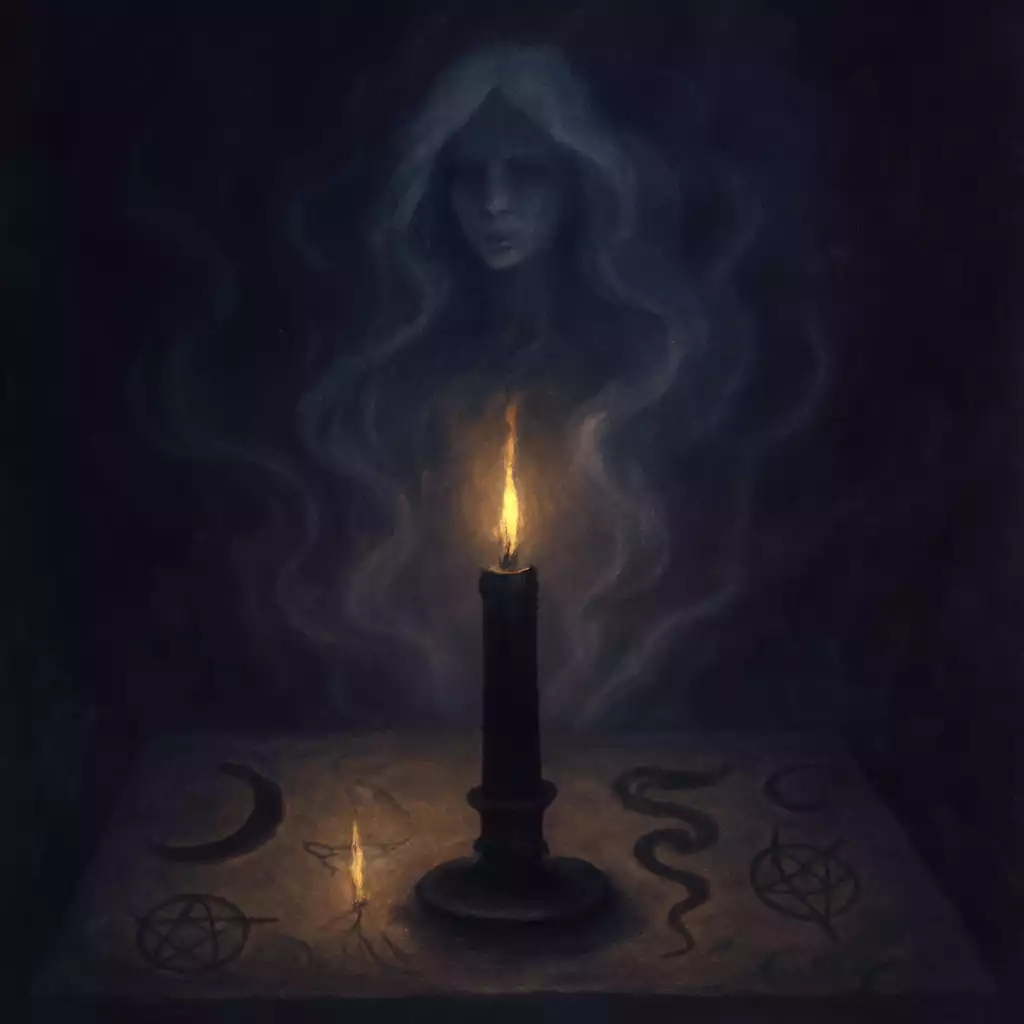
Black Magic — Truth, Myth and Modern Meaning
Table of Contents
Introduction — The Fear, The Myth, The Shadow
Black magic is a phrase that has traveled through centuries carrying the weight of misunderstanding. It has been whispered as a warning, wielded as an accusation, and used as a storybook symbol for all things forbidden. Yet when we trace the origins of the term, unravel its cultural layers, and examine its psychological impact, one truth becomes clear: what society calls “black magic” often reveals far more about collective fear than about actual magical practice.
A Word That Became a Weapon
For hundreds of years, the label black magic was applied to anything that challenged established power — especially practices rooted in feminine wisdom, folk traditions, and marginalized cultures. Healing rituals, ancestral work, herbal medicine, protective spells, intuitive arts, and emotional alchemy were frequently pushed into the shadows simply because they existed outside institutional approval. In this way, the term became less a description and more a dismissal: a way to discredit what was misunderstood or culturally unfamiliar.
A Modern Perspective: Beyond Superstition
In contemporary witchcraft, the concept requires deeper examination. Black magic is not a monolithic system nor a universal set of harmful acts. It is a mirror — reflecting intention, emotion, and the unspoken aspects of human experience. It deals with the shadow self, not as something dangerous by definition, but as a realm requiring clarity, ethics, and emotional maturity.
The Real Source of Fear
What most people fear is not the magic itself.
It is the shadow — their own unprocessed intensity, their own boundaries, their own capacity to influence the world around them.
Understanding black magic means exploring the intersection of energy, psychology, history, and myth. It means looking beyond sensational stereotypes and stepping into a grounded, responsible understanding of magic as an energetic and emotional craft. This article invites you to move past fear into awareness — where myth dissolves, and truth begins.
New to this? Start with Witchcraft Explained: Foundations of Magic.

The Origins of the Term — How History Created the Myth
The idea of “black magic” did not emerge from magical practice itself. It was shaped by culture, politics, religion, and fear. To understand why the term carries so much distortion today, we must look at who defined it, why they defined it that way, and what was happening at the time.
A Term Born from Power, Not Practice
The earliest uses of the phrase appear in periods where authority structures — religious, political, and patriarchal — sought to control how people accessed spirituality. Anything outside sanctioned doctrine was suspect. Anything rooted in feminine knowledge, nature, or ancestral wisdom was labeled dangerous. In these eras, black magic was not a category of spells. It was a tool of social control.
Herbal healers, midwives, wise women, and folk practitioners were often described as engaging in “dark” practices, not because their magic was harmful, but because it existed independently from male-dominated institutions. Their knowledge of plants, cycles, spirits, and subtle energy disrupted the narrative that spiritual power belonged solely to the elite. And so the term “black magic” became a convenient way to delegitimize them.
Cultural Bias and the Demonization of the Unknown
As European systems expanded, anything associated with non-Christian, Indigenous, African, Middle Eastern, or Asian traditions was placed under the same shadowed label. The unfamiliar was cast as evil. The misunderstood became threatening. Rituals of protection, communication with ancestors, trance work, drumming, dance, and offerings — all these sacred practices were reinterpreted through a lens of suspicion.
The word “black” itself became unfairly tied to moral judgment, reflecting colonial biases rather than reality. Entire cultures were misrepresented, reduced to superstition, and stripped of context.
Myth-Making Through Fear
Over centuries, fear-based storytelling reinforced these distortions. Folk tales, sermons, and later, literature and film, painted black magic as inherently malicious. The narrative was simple: anything powerful, emotional, feminine, or outside approved religion must be dangerous.
But these myths reveal more about societal anxieties than about magic itself.
The truth is far quieter, far older, and far more human.
“Black magic” became a shadow cast by dominant culture — not an accurate reflection of how magic was truly practiced.
What Black Magic Actually Is in Modern Witchcraft
Despite centuries of legend and cultural distortion, modern practitioners understand something essential: black magic is not a category of evil practices. It is a relationship — between intention, emotion, shadow, and the unseen layers of human experience. In contemporary witchcraft, the term functions less as a moral label and more as a description of how deeply a practitioner is willing to engage with their own inner world.
A Practice Rooted in Intention, Not Morality
Magic itself is neutral. It carries the imprint of the intention that shapes it. Protective magic can be used with love or with fear. Banishing can be done with clarity or with resentment. Binding can come from self-defense or from unresolved pain. The action is not inherently “black” or “white”; the reason behind it is what defines its energetic consequences.
For this reason, black magic in the modern sense is often associated with practices that involve:
- confronting the shadow
- working with intense emotion
- reclaiming suppressed power
- setting strong energetic boundaries
- navigating desire, grief, fear, or anger
- taking accountability for the ripple effects of one’s will
None of these are immoral. They are simply deep.
Working With the Shadow Self
In spiritual terms, the “shadow” is the part of the psyche that holds what we avoid, repress, or deny. When a witch works with this realm, they are not conjuring darkness for harm; they are meeting the unseen parts of themselves that influence their emotions, relationships, and magic.
This is why the work can feel intense: it reveals truths we have not yet integrated.
A practitioner who understands black magic is one who:
- acknowledges their emotional landscape
- accepts their capacity for influence
- does not fear their own power
- approaches intensity with responsibility and clarity
The Misconception of Harm
Many assume black magic equals intentional harm. In reality, most modern witches engaging in shadow-based work are doing so for healing, boundaries, release, or protection. Harmful spellcasting exists — just as harmful actions exist in every human domain — but it is not representative of the full spectrum of shadow work.
Black magic, in its mature form, is not an invitation to chaos.
It is an invitation to self-awareness.
When practiced with consciousness, it becomes a path of reclamation, emotional truth, and personal sovereignty.

Fear, Projection & the Psychology of the Shadow
Black magic has long been framed as something external — a force “out there,” lurking in shadows, waiting to cause harm. But in truth, the greatest fear humans carry is not of mysterious rituals or unseen energies. It is the fear of their own inner landscape. The fear of what emotion, desire, anger, grief, or unmet needs might reveal. This psychological dimension is one of the primary reasons the term “black magic” became so distorted.
Projection: When the Inner Shadow Is Cast Onto Others
Projection occurs when a person attributes their own uncomfortable feelings, impulses, or unresolved wounds onto someone else. Historically, society projected collective fears onto witches, healers, and practitioners of folk magic. Instead of acknowledging insecurity, jealousy, loss of control, or spiritual longing, communities externalized those emotions by creating the myth of a dangerous “other.”
This pattern continues today. Many people who fear “black magic” are not afraid of spells — they are afraid of:
- emotional intensity
- conflict or boundaries
- their own anger or desire
- their unmet longing for power or agency
- the parts of themselves that do not fit the “good” persona
Magic becomes a convenient scapegoat for unprocessed shadow.
The Human Fear of Power
Power is neutral, but many fear what they might do if they embraced their full strength. This fear often appears as moral panic around darker forms of magic. But the panic rarely comes from the magic itself — it comes from the anxiety that arises when someone realizes they are capable of influencing their life, shaping outcomes, or confronting what hurts.
For some, it feels safer to label magic as “dangerous” than to explore their own emotional depths.
Why the Shadow Feels Threatening
The shadow is not evil.
It is simply unacknowledged.
Fear arises because:
- the shadow holds old emotions
- it challenges the public identity (“I’m fine,” “I’m kind,” “I’m calm”)
- it demands honesty
- it invites transformation
People often resist this inner confrontation. It feels easier to demonize the unknown than to sit with discomfort.
Integration Dissolves Fear
When the shadow is approached with compassion, clarity, and intention, fear dissolves. What once looked like “darkness” becomes information — emotional truth, psychic depth, intuition, and personal power.
Understanding this psychology is essential to understanding modern black magic.
The danger was never the magic.
The danger was the refusal to face the self.
Ethics, Boundaries & Energetic Consequence
One of the most persistent misconceptions about black magic is the belief that it operates outside of ethics. But modern practitioners understand something essential: the deeper the magic, the greater the responsibility. Shadow work, protective magic, curse-breaking, and energetic boundary-setting are not lawless acts. They require maturity, clarity, and an understanding of how intention ripples through the energetic field.
Magic Is Neutral — Intention Is Not
Magic is neither good nor bad. It is a tool, a current, a movement of will shaped by emotional, mental, and spiritual intention. What determines ethical alignment is not the technique, but the why behind it.
Two witches could perform the same spell — one from fear, one from empowerment.
The energetic outcome would be entirely different.
This is why ethical practice asks the practitioner to examine themselves honestly:
- What emotion is driving the work?
- Is this action rooted in truth, or in a temporary impulse?
- Is this spell enforcing a boundary, or crossing one?
- Does this intention respect free will?
- Will this create a chain of consequences I am prepared to carry?
Such questions are not meant to block power — they refine it.
Boundaries Are Not Harm
Many outsiders mistake boundary magic for harm. But protection, warding, banishing, and return-to-sender workings are not acts of aggression. They are acts of sovereignty.
A boundary is not violence.
A boundary is alignment.
In physical life, we lock our doors, secure our homes, and choose who we allow into our space. Energetic boundaries function the same way. Protective magic exists not to attack but to defend — to maintain spiritual health, emotional clarity, and safety.
Consequences: The Unspoken Law of Energetics
Every magical act carries consequence — not punishment, but energetic physics. Emotion amplifies intention, and intention shapes outcome. When shadow work is performed without awareness, results can feel chaotic or overwhelming. When performed with clarity, it becomes transformative.
The key is understanding that magic echoes.
It moves outward, and it moves inward.
This is why ethical practice is inseparable from self-awareness.
The practitioner who cultivates presence, emotional regulation, and grounded decision-making becomes capable of wielding deep magic with integrity — even when navigating shadow.
True Power Is Responsible Power
Ethics are not limitations — they are the framework through which magic becomes effective, safe, and aligned. A witch who understands energetic consequence does not fear their shadow. They work with it consciously, allowing intensity to become wisdom, boundaries to become protection, and power to become purpose.
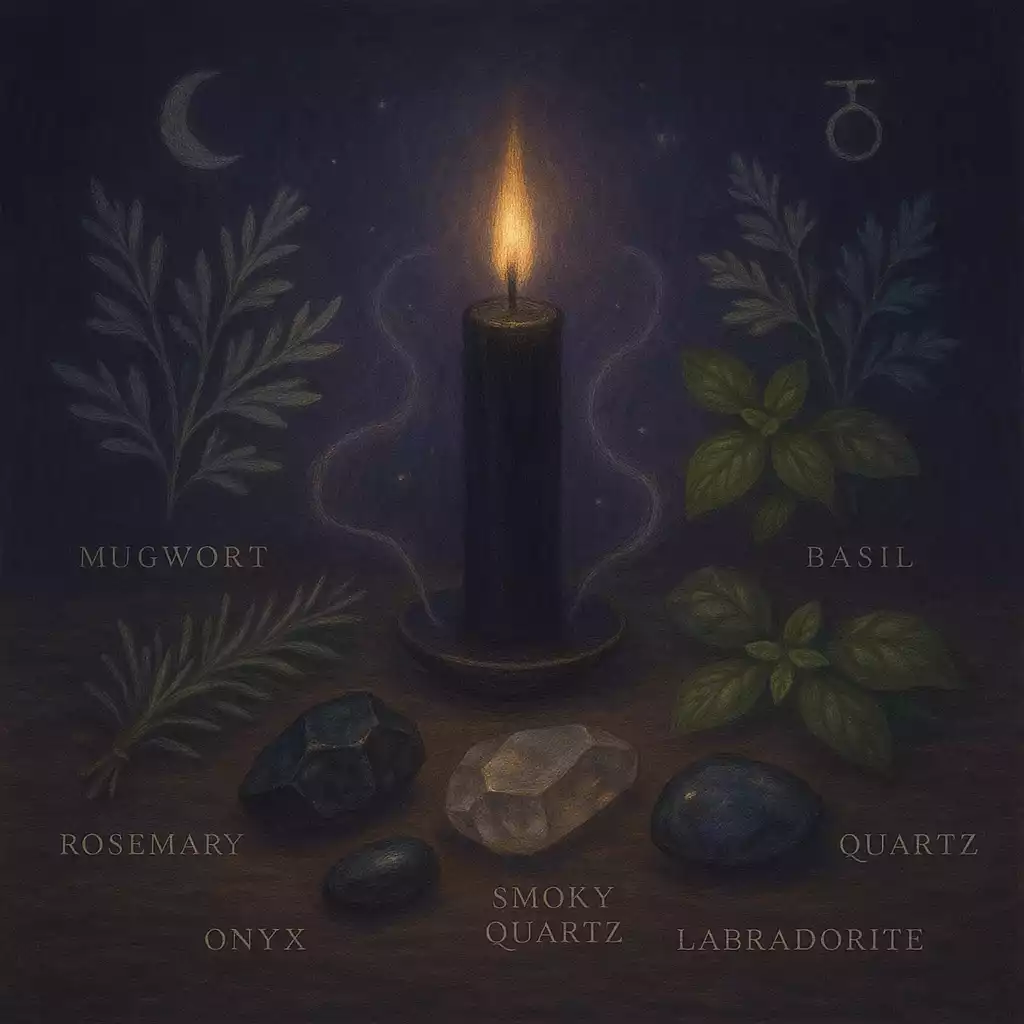
Correspondences of Shadow Work & Protective Magic
Every form of magic has a language — a way it speaks through color, element, plant, stone, and celestial timing. In shadow work and protective magic, these correspondences are not about summoning darkness; they are about creating containers for intensity, truth, release, and energetic fortification. When chosen with intention, they help the practitioner stay grounded, clear, and aligned as they navigate the deeper currents of the craft.
Colors That Hold the Shadow
Black, deep purple, and midnight blue are often associated with shadow work because they absorb, hold, and transform energy. Black is the color of the void — not emptiness, but possibility. It symbolizes the place where old stories dissolve and new identity emerges. In protective magic, it becomes a shield rather than a threat, a cloak that hides what must be protected and reveals what must be claimed.
Herbs & Plants of Depth and Clarity
Shadow and boundary magic often draw upon botanicals known for cleansing, grounding, or strengthening the energetic field. Mugwort deepens intuition. Rosemary purifies. Basil strengthens boundaries. Rue breaks cords and patterns. These plants have been used for centuries not to curse but to clear the pathways where fear, confusion, or external influence might linger.
Crystals That Anchor the Work
Stones like obsidian, onyx, smoky quartz, and labradorite create stability and psychic protection. They do not amplify intensity — they structure it. Obsidian reveals truth. Onyx reinforces resilience. Smoky quartz filters stagnant energy. Labradorite shields the aura while keeping the intuitive channel open. These stones act like quiet guardians, helping the practitioner remain centered while working with potent emotional or energetic material.
Celestial Alignment & Timing
Shadow work thrives under the waning moon, when release, reflection, and inward movement feel natural. Protective and boundary magic often resonates with Saturn’s influence — the planet of discipline, structure, and spiritual responsibility. Work done under these energies becomes more grounded, truthful, and aligned with long-term growth rather than momentary emotion.
Correspondences do not make the magic “dark.”
They make it intentional, giving form and clarity to practices that require depth, courage, and self-awareness.
The Shadow Flame Rite — A 15-Minute Cleansing & Integration Ritual
Shadow work does not require dramatic ceremony. It requires honesty, presence, and a container strong enough to hold whatever arises. The Shadow Flame Rite is a simple, fifteen-minute practice designed to help you witness your own inner landscape without fear. It is not meant to summon anything external; rather, it illuminates what already exists within, offering clarity and release.
Preparing the Space
Choose a quiet place where you will not be interrupted. Dim the lights or allow natural twilight to guide the atmosphere. Place a single black or deep purple candle before you — a symbol not of darkness, but of depth. Keep a bowl of water nearby to represent emotional clarity and grounding. Sit comfortably, with both feet on the floor or body supported.
The Rite
Begin by taking three slow breaths, allowing your awareness to settle into your body. Light the candle and watch its flame steady. In the glow, bring to mind one emotion, memory, or pattern you have avoided — not to relive it, but to acknowledge its presence. Speak its name softly, or hold it silently in your mind.
As you watch the flame, imagine it illuminating this shadow. Not burning it. Not erasing it. Simply revealing its true shape. Shadows soften when seen. Let any sensations rise: tightness, clarity, warmth, even resistance. All are valid.
When you feel ready, dip your fingers lightly into the water and touch your heart or forehead. This gesture symbolizes integration — the willingness to understand rather than suppress. Say, “What is mine, I claim. What is not mine, I release.”
Closing the Work
Blow out the candle with intention, visualizing the insight settling into your awareness. Pour the water into the earth or down a drain as an offering of release. The rite ends not with dramatic transformation, but with a shift toward truth — quiet, steady, and wholly your own.
Invocation for Clarity, Protection & Shadow Integration
Shadow before me, shadow behind me,
Shadow within me, rising to light.
What is hidden, I now witness.
What is heavy, I release.
What is mine, I claim with honor.
What is not mine, I return to the earth.
May clarity surround me,
May protection uphold me,
May truth walk with me in all things.
I move without fear.
I rise without doubt.
I integrate what was forgotten
And reclaim what was mine all along.
So it is, and so it becomes.
Continue with: White Magic — A Complete Guide to Healing, Protection & Positive Spellwork.

Empowering Conclusion — Reclaiming the Shadow as Sacred Power
Black magic has never been the danger people imagined. The true danger has always been misunderstanding — of history, of culture, and of the human psyche. When we strip away fear, myth, and projection, we discover that what society labeled “black magic” is often the realm of emotional honesty, boundary-setting, ancestral wisdom, and the courage to face the shadow without turning away.
The shadow is not an enemy. It is a doorway.
A place where unspoken truths finally receive voice, where suppressed emotions find release, where personal power is reclaimed rather than feared. Shadow work, protective magic, and boundary rituals are not acts of rebellion against the light — they are the foundation that allows the light to exist at all.
A witch who knows their shadow does not fear intensity.
A witch who understands consequence does not misuse power.
A witch who approaches their depth with clarity becomes unshakeable.
The old stories told us to fear this part of the craft. But we are in a new era — one in which spiritual maturity replaces superstition, and emotional intelligence replaces moral panic. Reclaiming the shadow is not only a magical practice; it is a return to wholeness.
To know your darkness is to understand your strength.
To understand your strength is to wield your magic with integrity.
And when you do, the shadow becomes not a threat, but a sacred ally — quiet, honest, and powerful.
This is the truth behind black magic:
not danger, but depth.
not harm, but awareness.
not fear, but sovereignty.
Last Updated on January 23, 2026 by Abigail Adams




Leave a Reply